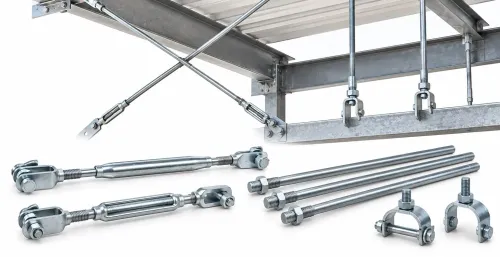
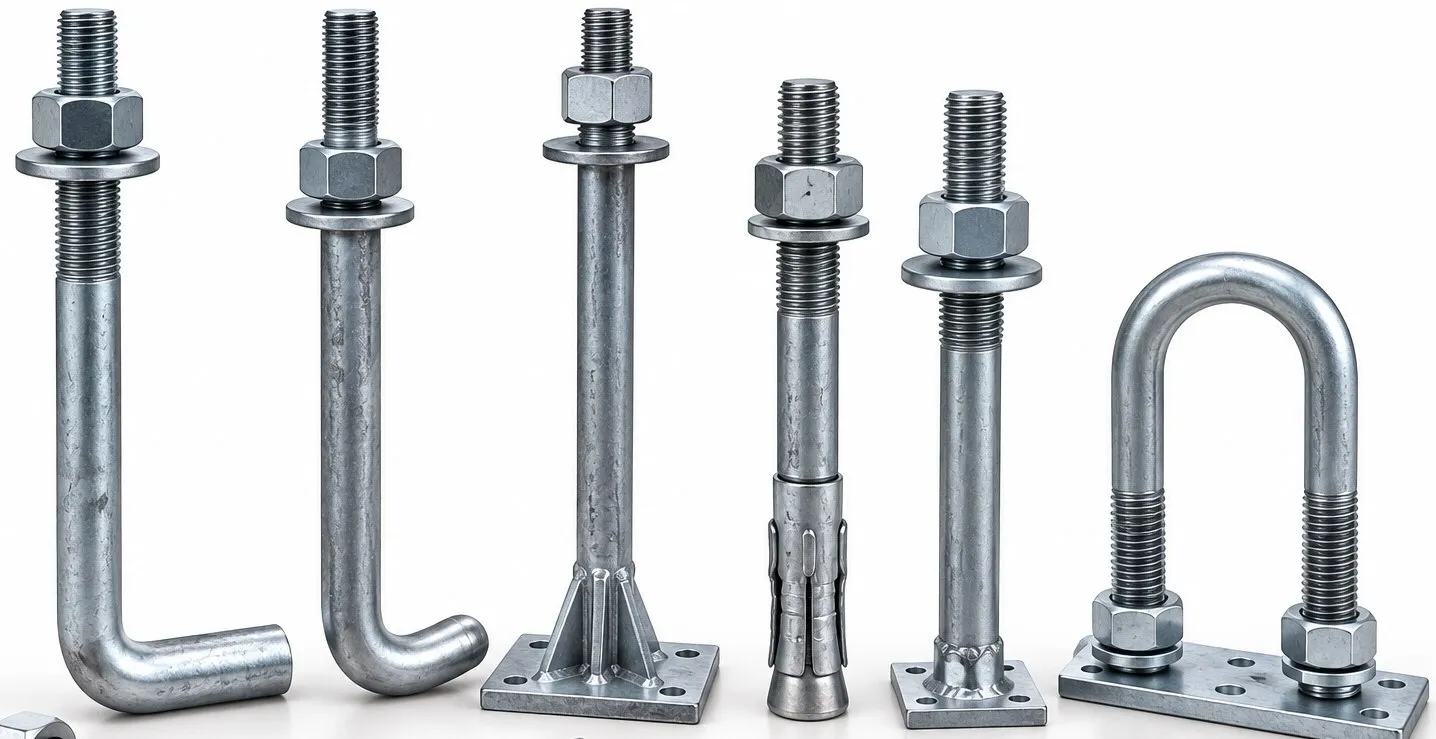
A loose industrial foundation connection can result from a rotating nut, stripped threads, anchor-rod damage, crushed grout, concrete failure, plate movement, corrosion, or settlement. By the end, you will know how to isolate the connection, identify the failure, choose a repair route, and prepare the information needed for a safe replacement in Nagpur.
Key takeaways
- Get structural approval for temporary support before loosening any loaded anchor rod.
- Check bolt tension, corrosion, thread damage, concrete cracking, grout failure, and base-plate movement.
- Use replacement anchors only after confirming loads, embedment, edge distances, and concrete condition.
- Record bolt grade, installation torque, testing results, grout details, and final inspection findings.
Make the connection safe before you inspect it
Do not loosen a nut or remove an anchor rod until a qualified structural engineer has approved a temporary support and load-transfer plan. A loaded column can shift when one rod stops carrying tension, especially under wind uplift, frame moment, crane action, or equipment vibration.
The plan must identify the supports, jacks, shores, load capacity, installation sequence, and the point at which the permanent connection resumes the load.
1. Stop the machine, lower suspended crane loads, isolate hydraulic and pneumatic systems, and apply electrical and mechanical lockout/tagout. Do not inspect beside an energised vibrating foundation.
2. Install designed shores, braces, or jacks against a stable bearing surface. Do not use loose packing, a forklift, or an unverified jack as structural support. Never jack a column until the engineer defines the permitted lift and monitoring points.
3. Establish an exclusion zone around the column, crane runway, machine, and possible fall path. Prevent crane travel, lifting, vehicle impact, and unauthorised access while the connection is open.
4. Mark the bolt location and record column plumbness, base-plate movement, grout gaps, and any change in support reactions before touching the nut. Watch the connection during each controlled step.
5. Stop immediately for cracked or spalled concrete, a rotating rod, stripped threads, bent or necked-down steel, missing embedment, anchor-plate movement, structural distortion, or an active foundation crack. Do not tighten through these defects.
A loose foundation bolt solution in Nagpur must account for monsoon wind uplift, equipment cycles, and the original design loads; Nagpur’s seismic classification alone does not establish a safe temporary arrangement.
Diagnose the actual failure at the bolt and foundation
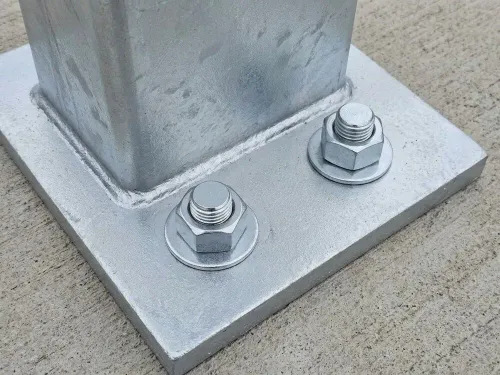
A nut that turns without restoring clamping force does not prove a failed bolt. Clean the assembly, mark the nut and rod, measure exposed thread projection, and inspect the washer, base-plate hole, grout, concrete, and column plumbness before applying torque.
- Loose nut: the nut rotates, threads remain sharp, the rod is straight, and the marked nut moves while the rod stays fixed.
- Stripped threads: the nut binds, slips, or spins over flattened thread crests; stop if it cannot achieve full thread engagement.
- Bolt elongation: a stretched rod shows reduced diameter, necking, bending, or increased projection; compare with the drawing or an undamaged bolt.
- Washer embedding: a dished washer or circular indentation in the plate shows that clamping force crushed the bearing surface.
- Corrosion: pitting, rust scale, and reduced diameter mean the original steel section is no longer reliable; rust jacking can also split surrounding grout.
- Plate movement: polished slip marks, an enlarged hole, displaced shims, or a changing gap between plate and grout indicate movement despite an intact nut.
- Grout separation: tap around the plate and inspect edges for voids, crushed grout, water paths, or a visible gap; a sound rod cannot compensate for lost bearing.
- Cracked concrete: map crack width and direction, then stop for radial cracks, spalling, breakout, or an active machinery-foundation crack.
For “foundation bolts requirements for loose connections in nagpur”, record site settlement indicators too: uneven gaps, changed column plumbness, drainage problems, or seasonal movement in black-cotton soil. Repeated movement demands a geotechnical review, not repeated tightening.
Choose between tightening, local repair, anchoring, and replacement
Tightening fits only a sound bolt-and-foundation connection that lost preload through nut rotation, washer embedding, or minor grout shrinkage. It cannot recover steel strength, concrete capacity, or embedment already lost. Select the method against the observed failure and the loads at the base plate.
| Option | What it means | When it applies |
|---|---|---|
| Tightening | Restore specified clamping force using the approved procedure | Threads, nut, washer, rod, grout, concrete, and plate remain sound; no movement or capacity loss is recorded |
| Local repair | Replace the nut or washer, remove defective grout, or repair a small non-structural surface defect | Damage is confined to removable hardware or local grout, and the engineer confirms full embedment and load transfer |
| Anchoring | Install a designed chemical or mechanical anchor, or add a supplemental anchor system | The original rod lacks usable threads or capacity, but the concrete mass and edge distances can resist the revised tension, shear, and uplift |
| Replacement | Remove and replace the rod, base-plate connection, or affected foundation detail | The rod is bent, necked, severely corroded, stripped, or displaced, or the foundation has lost capacity |
Stop work instead of tightening if concrete is cracked or spalled, the bolt rotates during nut removal, threads are damaged, embedment is missing, the anchor plate moves, the column or plate distorts, or an active foundation crack surrounds machinery.
Investigate settlement, expansive soil, drainage, or vibration before specifying foundation bolt repair in nagpur; otherwise the same movement can loosen the new connection. A repair engineer must verify wind uplift, shear, moment, crane or equipment cycles, and the actual foundation condition.
Specify and verify a replacement foundation bolt
Do not order a replacement from the old bolt’s visible length alone. For foundation bolt replacement in Nagpur, confirm the connection design, load path, concrete condition, and installation access before selecting the rod.
1. Obtain the approved foundation or equipment drawing. Record bolt diameter, grade, thread form and length; embedment depth; projection above the base plate; bend, hook or anchor-plate geometry; hole diameter; washer and nut sizes; bolt spacing; and edge distances.
2. Confirm design actions at each bolt: tension from uplift, shear, compression, overturning moment, crane impact, equipment vibration and seismic or wind effects. Ask the structural engineer whether the replacement must match the original grade or satisfy a revised factored load.
3. Verify the foundation’s concrete grade and tested condition, pedestal thickness, reinforcement layout, existing cracks, grout thickness, hole depth, edge distance and spacing. Scan before drilling. Do not cut reinforcement or drill through a cracked or weakened pedestal without an engineered repair detail.
4. Identify soil and exposure conditions at the site. In Nagpur, black-cotton soil, seasonal moisture changes, poor drainage and differential settlement can loosen a sound bolt again; investigate recurring movement before installation.
5. Select cast-in or post-installed anchorage from the approved design. Check the anchor manufacturer’s embedment, hole diameter, cleaning method, curing temperature and allowable loads, then record the product, batch number and installation limits.
RSR Steel Pvt. Ltd can be asked for a dimensioned bolt schedule rather than a generic rod quotation, so the supplied thread, projection and washer arrangement match the approved drawing.
Release the repair only after confirming hole-cleaning records, cure time, proof tests where specified, grout placement, alignment measurements and photographs before concealment. These are the foundation bolts requirements for loose connections in Nagpur that separate a designed repair from temporary tightening.
Control torque, testing, grout, and the repair record
Tighten the repaired connection only to the approved torque or calibrated tensioning procedure for that bolt diameter, grade, lubrication, washer arrangement, and thread condition. Do not copy a generic torque value: dry and lubricated threads can produce different preload at the same reading.
A torque check confirms nut tightening or installation resistance, not concrete-anchor bond or design capacity. Specify a proof test or installation verification for a safety-critical connection, uncertain concrete, or post-installed anchor, then inspect for renewed plate movement, grout crushing, thread slip, and column displacement.
Confirm column plumbness and base-plate elevation with a survey before closing the repair.
Place approved non-shrink grout only after the base plate is correctly aligned and supported. Record the product, batch, mixing water, placement date, curing period, and any voids or leakage; loading before the stated cure time can reopen the gap.
The handover for foundation bolt repair in nagpur should include:
- Approved repair drawing and bolt location reference
- Bolt diameter, grade, projection, nut and washer condition
- Anchor product, batch number, drilling depth, hole-cleaning method, and installation date
- Concrete strength assumption and observed cracks or breakout
- Torque or tensioning method, calibrated tool identity, and readings
- Proof-test results, where specified
- Final alignment survey and photographs before grout or coating concealed the work
If movement returns, investigate soil and drainage rather than repeating tightening. Black-cotton soil, seasonal moisture change, and differential settlement can defeat a loose foundation bolt solution in nagpur.
Frequently asked questions
What should you do before inspecting a loose foundation bolt?
Obtain a qualified structural engineer’s temporary support and load-transfer plan before loosening or removing an anchor rod.
How do you diagnose a loose foundation bolt connection?
Inspect bolt tension, corrosion, thread damage, washer and nut condition, base-plate movement, grout loss, concrete cracking, and foundation breakout.
When should you replace a foundation bolt instead of tightening it?
Replace it when the rod has yielded, cracked, severe corrosion, damaged threads, inadequate embedment, or no reliable load path after tightening.
What must you verify for a replacement foundation bolt?
Verify the bolt grade, diameter, embedment depth, projection, hole diameter, edge distance, spacing, installation method, and design load.
Keywords